Industrial Wastewater Treatment Failure: Causes, Signs & Solutions
Why Industrial Wastewater Treatment Systems Fail and What Most People Only Realise Too Late
There is a quiet moment in many industrial wastewater treatment plants.
Nothing appears wrong. Pumps are running. Tanks are full. Readings are being recorded. Discharge may even still be within limits.
And yet, something has already shifted.
Operators begin making more adjustments than usual. Sludge no longer behaves the way it used to. COD trends do not quite settle. What once felt predictable now feels uncertain.
This is how failure begins in most systems, not with a breakdown but with a loss of balance.
From years of working alongside industrial plants, one truth becomes clear:
Wastewater systems rarely fail because they are incapable. They fail because small deviations are allowed to accumulate, quietly, until the system can no longer absorb them.
A direct answer: why do wastewater treatment systems fail?

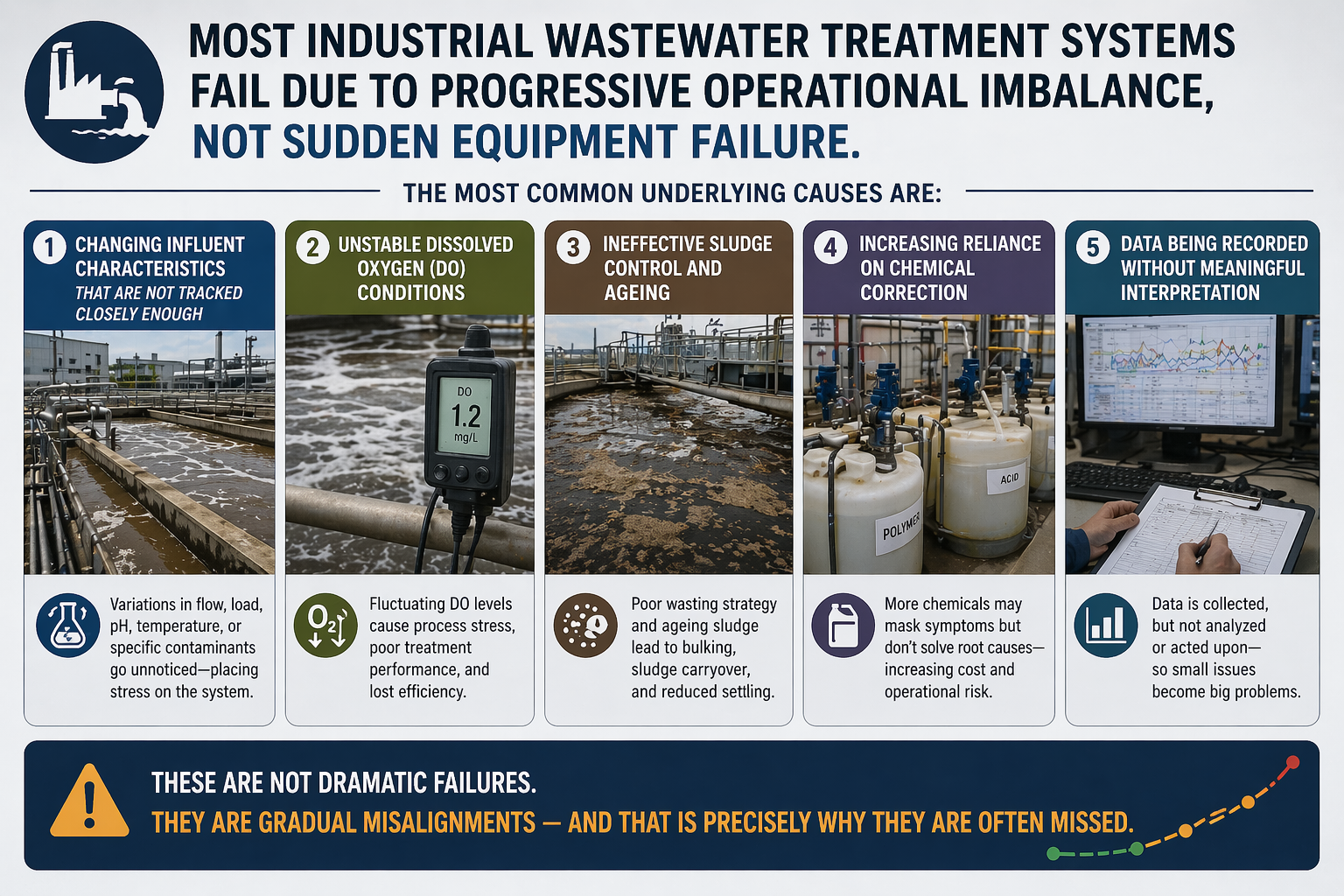
Most industrial wastewater treatment systems fail due to progressive operational imbalance, not sudden equipment failure.
The most common underlying causes are:
- changing influent characteristics that are not tracked closely enough
- unstable dissolved oxygen (DO) conditions
- ineffective sludge control and ageing
- increasing reliance on chemical correction
- data being recorded without meaningful interpretation
These are not dramatic failures. They are gradual misalignments — and that is precisely why they are often missed.

What failure looks like before it is called “failure”
In practice, system decline is subtle.
It reveals itself in patterns rather than events:
- discharge quality that fluctuates instead of stabilising
- sludge that settles differently from week to week
- aeration adjustments that become more frequent
- chemical dosing that increases without delivering consistent results
Individually, these signals rarely trigger alarm.
But together, they tell a story: the system is no longer in equilibrium.
One of the most important distinctions we see in the field is this:
A system can still be compliant, yet already be unstable.
And instability, if left unaddressed, is what eventually leads to failure.
The deeper causes — beyond the obvious
1. Influent variability: the constant that behaves like a variable
Industrial wastewater is not static.
It shifts with production cycles, cleaning regimes, raw material changes, and operational decisions made upstream. These shifts influence:
- organic loading (COD/BOD)
- pH conditions
- oil and grease content
- presence of inhibitory compounds
Yet in many facilities, operations downstream continue as if the influent were consistent.
This disconnect is subtle, but critical.
We often find that by the time a treatment issue becomes visible, the cause lies not in what is happening now but in what changed earlier in the process.
A system designed for one set of conditions cannot remain stable if those conditions are quietly evolving.
2. Dissolved oxygen: not a number, but a relationship
Dissolved oxygen is often treated as a parameter to maintain. In reality, it is a reflection of the balance between supply and biological demand.
Too little oxygen limits microbial activity.
But instability in oxygen, even within acceptable ranges, can be just as disruptive.
What matters is not only whether DO is “sufficient”, but whether it is consistent and aligned with the actual load entering the system.
In many plants, aeration adjustments are made reactively. More air is added when performance drops. Yet the root issue is often not insufficient air, but a mismatch between:
- changing organic load
- biomass condition
- oxygen transfer efficiency
Without addressing that relationship, increasing aeration alone rarely restores true stability.
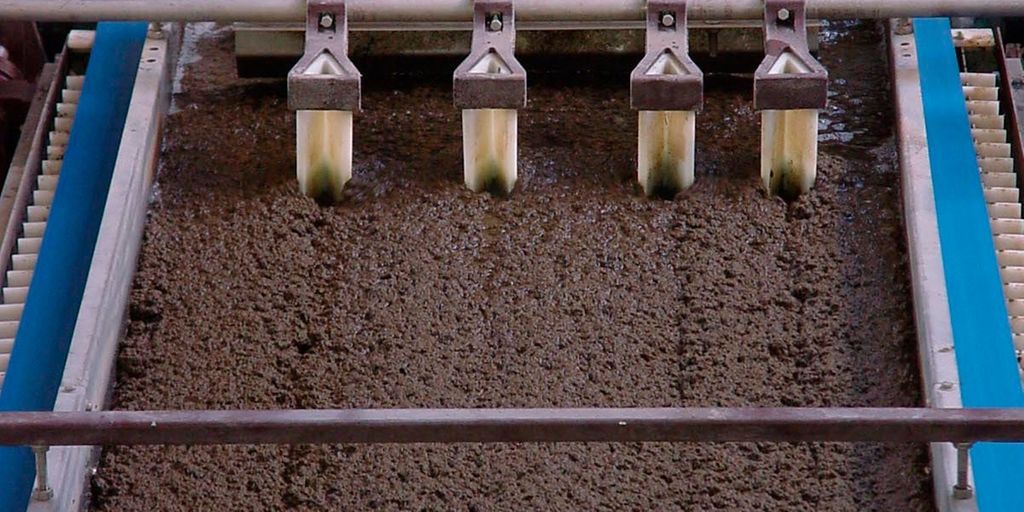
3. Sludge: the living system within the system
If wastewater treatment is a process, sludge is its memory.
It reflects everything the system has experienced — loading, shocks, imbalances, recovery.
And yet, it is frequently managed as a secondary concern.
When sludge control weakens, the consequences propagate:
- settling becomes unreliable
- clarifier performance declines
- MLSS rises without proportional treatment efficiency
- bulking or filamentous growth appears
One of the more persistent misconceptions is that higher MLSS automatically improves performance. In practice, without proper control of sludge age, wasting rates, and settling characteristics, excess biomass often reduces efficiency rather than enhancing it.
A stable system is not one with more sludge.
It is one with
well-managed sludge.
4. Chemical dosing: support, not substitution
Chemical programmes are an essential part of many treatment systems. They can stabilise, correct, and enhance performance when used with intent.
But when dosing becomes the primary method of control, it often signals something deeper.
We frequently observe patterns such as:
- gradual increase in chemical consumption
- diminishing returns from dosing adjustments
- dependency on constant correction
These patterns suggest that the system is no longer self-regulating biologically.
Chemicals can correct symptoms.
They cannot replace process balance.
The most resilient systems are those where chemical dosing works in harmony with biological stability, not in place of it.
5. Data without interpretation: the silent gap
Most facilities today are not lacking data.
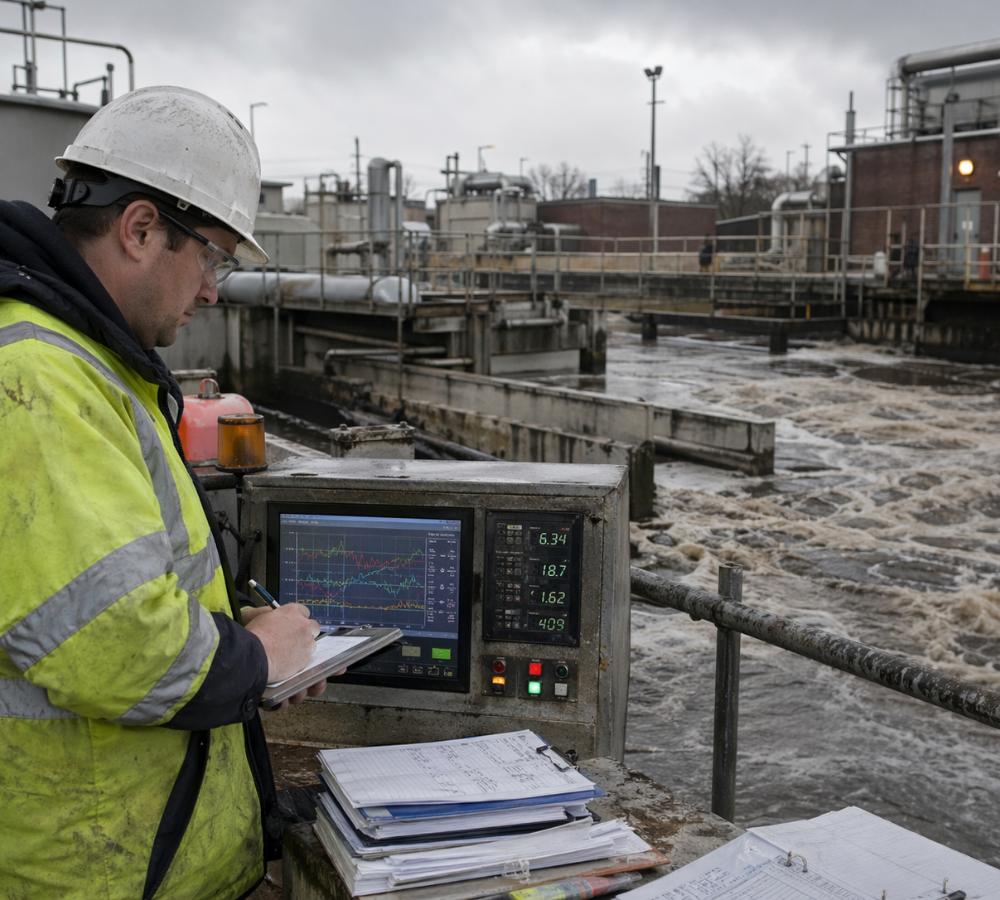
They monitor pH, DO, COD, MLSS, flowrates — often with impressive consistency.
The challenge lies elsewhere.
Data is reviewed as isolated points rather than as connected trends.
A slightly elevated COD reading is dismissed.
A minor shift in sludge behaviour is noted but not investigated.
A fluctuation in DO is corrected, then forgotten.
Yet in hindsight, these are often the earliest signals of a system drifting out of balance.
The ability to read data as a narrative — to see where the system is heading, not just where it is — is what separates stable operations from reactive ones.
What most people only realise later
Two plants can be designed with similar technologies, similar capacities, and similar objectives — and still perform very differently.
The difference is rarely in the equipment.
It lies in how the system is understood and managed over time.
Stable systems tend to:
- recognise patterns early
- adjust gradually rather than abruptly
- prioritise consistency over short-term correction
Unstable systems, on the other hand, often fall into a cycle:
- a symptom appears
- a correction is applied
- a new imbalance is introduced
- further correction follows
Over time, the system becomes harder to predict, and more expensive to maintain.

Restoring stability: what actually makes a difference
In practice, improvement does not come from dramatic changes. It comes from clarity and consistency.
Observe trends, not snapshots
Performance reveals itself over time, not in isolated readings.
Maintain operational stability where possible
Frequent fluctuation introduces avoidable stress into the system.
Align treatment with upstream behaviour
Wastewater reflects production. The two cannot be managed separately.
Treat sludge as a process, not a by-product
Its condition defines system performance.
Use chemicals with intention
As support, not as the foundation of control.
Experience, not theory, determines performance

On paper, many systems are capable.
But real-world wastewater treatment operates within constraints:
- variable influent
- changing production schedules
- operational limitations
- time pressures
This is where experience becomes indispensable.
It allows operators and engineers to distinguish between:
- a fluctuation and a trend
- a symptom and a root cause
- a temporary deviation and a developing instability
And ultimately, it is this understanding that determines whether a system remains stable or slowly drifts toward failure.
Final reflection
Most wastewater treatment systems do not fail because they are inadequate.
They fail because the imbalance is allowed to persist.
Not loudly, not suddenly but quietly, over time.
And by the time it is recognised, what could have been corrected early has already become costly to resolve.
In industrial wastewater treatment, stability is not something achieved once.
It is something maintained deliberately, consistently, and with understanding.
Recent Posts