

DOE Compliance Action Plan Malaysia: 90-Day IETS Improvement Blueprint How Can a Factory Recover From Wastewater Compliance Problems?

jones chee • 10 September 2026

Share this article

How Can a Factory Recover From Wastewater Compliance Problems?

Factories experiencing recurring wastewater compliance issues should focus on identifying the underlying causes rather than relying on short-term adjustments before inspections or sampling. . Instead, they should implement a structured improvement programme that identifies root causes, stabilises the Industrial Effluent Treatment System (IETS), improves operational discipline, and continuously monitors performance. A systematic 90-day action plan helps reduce compliance risks while building a treatment plant that performs consistently under normal operating conditions


Why Most Compliance Problems Keep Returning

Symptoms. Quick fixes. Repeated failures.


Many factories respond to compliance failures by:

  • Increasing chemical dosage
  • Extending aeration time
  • Cleaning equipment only before inspections
  • Sending additional laboratory samples
  • Adjusting pH at the last minute


These actions may temporarily improve effluent quality but rarely address the underlying causes.


Long-term compliance comes from improving the treatment process and not simply reacting to failures.


The 90-Day Compliance Blueprint

The objective is to move from reactive operation to predictable, stable, and explainable performance.

Phase 1 (Days 1–30): Assess and Stabilise

Goal: Understand the current condition of the wastewater treatment plant.


Recommended activities:

  • Review recent laboratory reports
  • Inspect all treatment units
  • Verify equipment condition
  • Review process flow
  • Evaluate influent variability
  • Review operating procedures
  • Check chemical consumption
  • Identify immediate compliance risks


Deliverables
  • Current plant assessment
  • Equipment condition report
  • Operational risk register
  • Initial improvement priorities


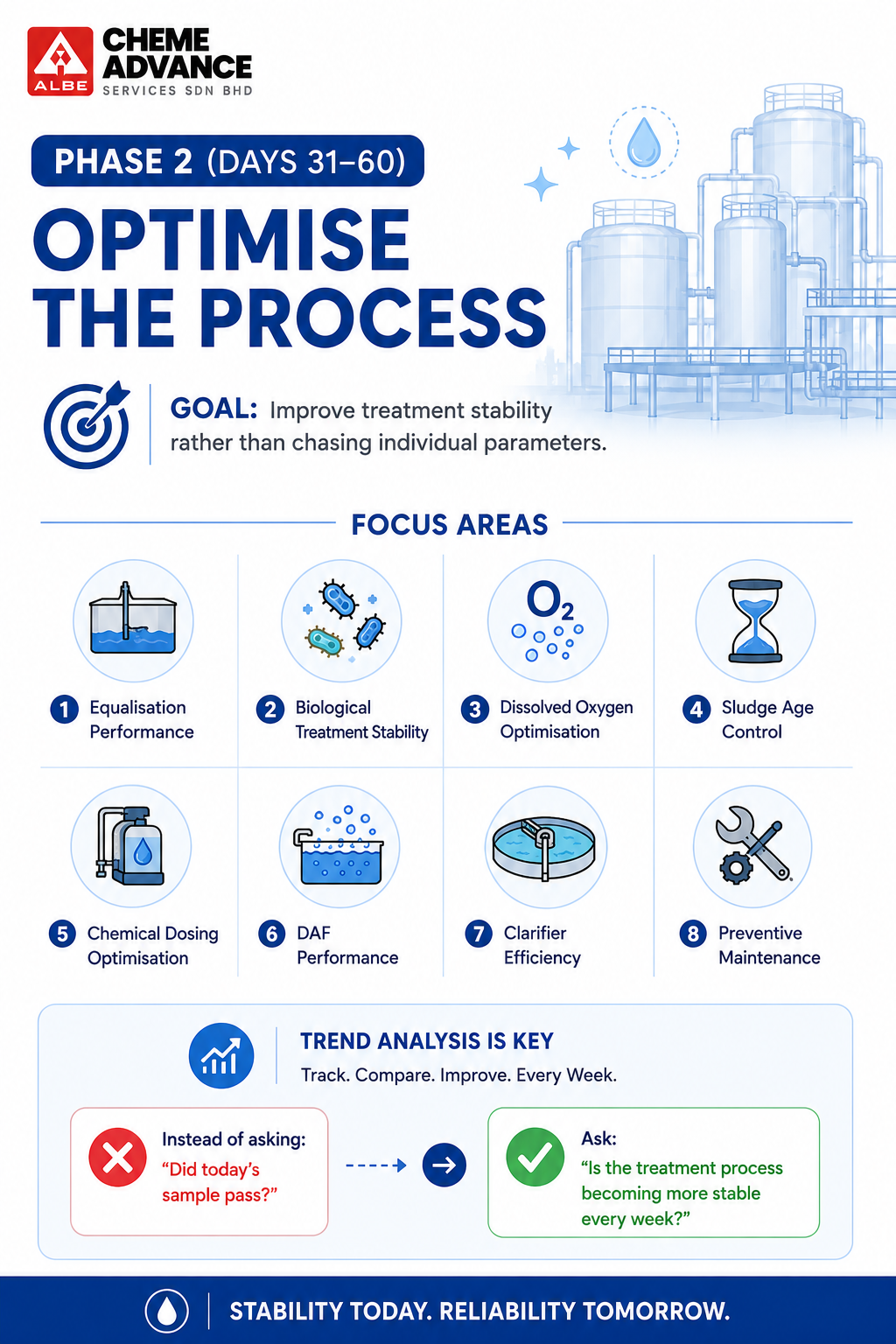
Phase 2 (Days 31–60): Optimise the Process

Goal: Improve treatment stability rather than chasing individual parameters.


Focus areas include:

  • Equalisation performance
  • Biological treatment stability
  • Dissolved Oxygen optimisation
  • Sludge age control
  • Chemical dosing optimisation
  • DAF performance
  • Clarifier efficiency
  • Preventive maintenance


Trend analysis becomes increasingly important during this stage.


Instead of asking:


"Did today's sample pass?"

Ask:


"Is the treatment process becoming more stable every week?"

Phase 3 (Days 61–90): Build Long-Term Compliance

Goal: Ensure improvements become standard operating practice.


Activities include:

  • SOP review
  • Operator training
  • KPI development
  • Preventive maintenance scheduling
  • Compliance documentation
  • Internal audit
  • Management review
  • Continuous monitoring programme


At this stage, compliance becomes part of routine plant operation rather than an emergency response.


90-Day Action Plan Summary

Timeline
Timeline
Key Activities

Days 1-30

Days 31-60

Days 61-90

Assess & Stabilise

Optimise

Sustain

Plant audit, equipment inspection, process review, risk identification

Biological process, DAF, chemical dosing, sludge management, monitoring

SOPs, training, KPIs, preventive maintenance, compliance documentation


Key Areas to Review

A successful compliance programme reviews the entire treatment system rather than focusing on laboratory results alone.

Process Design
  • Equalisation
  • Hydraulic loading
  • Process bottlenecks


Equipment
  • Pumps
  • Blowers
  • DAF
  • Mixers
  • Instruments
Biological Treatment
  • MLSS
  • Sludge age
  • Dissolved Oxygen
  • Settling


Chemical Treatment
  • Coagulant dosage
  • Polymer optimisation
  • pH control


Documentation
  • Monitoring logs
  • Laboratory reports
  • Maintenance records
  • Calibration certificates


Signs Your Plant Needs Immediate Attention

If several of these occur together, a comprehensive technical review should be considered.

  • Repeated DOE non-compliance
  • Rising chemical costs
  • Increasing sludge production
  • Frequent equipment breakdowns
  • Poor sludge settling
  • Low dissolved oxygen
  • Variable effluent quality
  • Frequent operator intervention

Our Observation

Across many industrial wastewater treatment facilities, recurring compliance issues are often linked to operational practices rather than technology limitations.


Plants that implement structured improvement programmes typically experience:

  • more stable biological treatment
  • lower chemical consumption
  • improved sludge settling
  • reduced emergency call-outs
  • greater confidence during DOE inspections


The greatest improvement usually comes from understanding the treatment process rather than continuously adding new equipment.


Final Thoughts on DOE Compliance Planning in Malaysia

Sustainable DOE compliance is not achieved through last-minute corrections before inspections. It is built through a structured programme of assessment, optimisation, standardisation, and continuous improvement.


Factories that follow a systematic action plan are better positioned to maintain stable effluent quality, reduce operating costs, and improve confidence during regulatory inspections.


A reliable wastewater treatment plant should maintain stable performance during routine operation, not only around sampling or inspection dates.


Need Help Developing a DOE Compliance Action Plan?

If your facility is facing recurring wastewater treatment issues, Cheme Advance Services Sdn. Bhd. can help develop a practical engineering roadmap tailored to your plant.


Our technical team supports manufacturers across Malaysia with:

  • Industrial Effluent Treatment System (IETS) audits
  • Root cause analysis
  • Wastewater treatment troubleshooting
  • Process optimisation
  • Biological treatment stabilisation
  • Operation & Maintenance (O&M)
  • Plant upgrading
  • Operator training
  • Compliance readiness assessments
Book a Wastewater Compliance Audit


A professional technical audit helps identify process bottlenecks, operational risks, and improvement opportunities before they result in repeated compliance failures.


Frequently Asked Questions

How long does it take to stabilize a wastewater treatment plant?

The timeframe depends on the severity of the issues, but many operational improvements can begin within the first few weeks. Biological systems may require longer to fully stabilise.

Should factories upgrade equipment immediately?

Not always. Many compliance issues can be resolved through process optimisation, operator training, maintenance, and improved monitoring before investing in major capital upgrades.

What is the first step after a DOE non-compliance event?

The first technical step is to investigate the potential root cause while also addressing any immediate regulatory or operational requirements . Reviewing plant operation, equipment condition, influent characteristics, and historical trends is essential before making major process changes.

Can a compliance action plan reduce operating costs?

Yes. Improving process stability often reduces chemical consumption, energy use, sludge production, and emergency maintenance, leading to lower long-term operating costs.


References

  1. Environmental Quality Act 1974 (Act 127), Laws of Malaysia.
  2. Environmental Quality (Industrial Effluent) Regulations 2009.
  3. Department of Environment (DOE) Malaysia – Guidance on Industrial Effluent Management.
  4. Metcalf & Eddy, Wastewater Engineering: Treatment and Resource Recovery, 5th Edition.
  5. Water Environment Federation (WEF) – Operation of Water Resource Recovery Facilities.
  6. Cheme Advance Technical Team – Engineering observations and operational experience in industrial wastewater treatment.

About Author

Jones Chee
Marketing Engineer | Cheme Advance Services Sdn. Bhd.


Jones is a Marketing Engineer at Cheme Advance Services Sdn. Bhd. and holds a Bachelor of Mechanical Engineering (Honours) from Monash University Malaysia. Drawing on over five years of experience in environmental engineering and working closely with Cheme Advance's technical specialists, he develops technically reviewed content on industrial wastewater treatment, plant optimisation, and environmental compliance.


Recent Posts

by jones chee 14 September 2026
Learn how wastewater treatment systems manage high COD and BOD, common causes of poor performance, and practical ways to improve industrial effluent treatment.
by jones chee 10 September 2026
Learn the common causes of high COD, BOD, fats, oils and grease in food factory wastewater, plus practical ways to improve treatment performance in Malaysia.
by jones chee 10 September 2026
Beyond the Treatment Plant: Our Commitment to Clean Water

by jones chee 31 August 2026
Learn Malaysia’s industrial effluent standards, Standard A and B discharge limits, key wastewater parameters, and factory compliance requirements.
by JH Han 24 August 2026
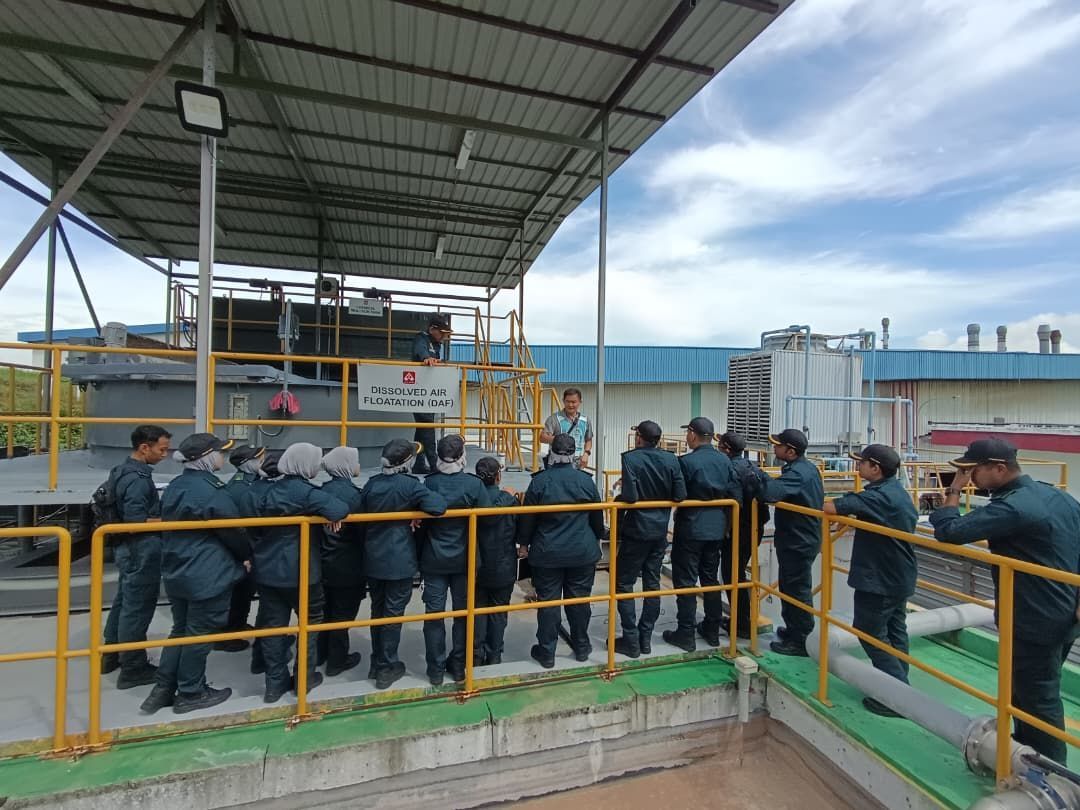
Prepare for a DOE inspection with this practical checklist covering wastewater documents, compliance records, monitoring logs, and Industrial Effluent Treatment System (IETS) requirements.

by jones chee 17 August 2026
Learn which projects require an EIA report in Malaysia, the prescribed activities under the EIA Order 2015, and key requirements for project proponents.
by QT LIM 10 August 2026
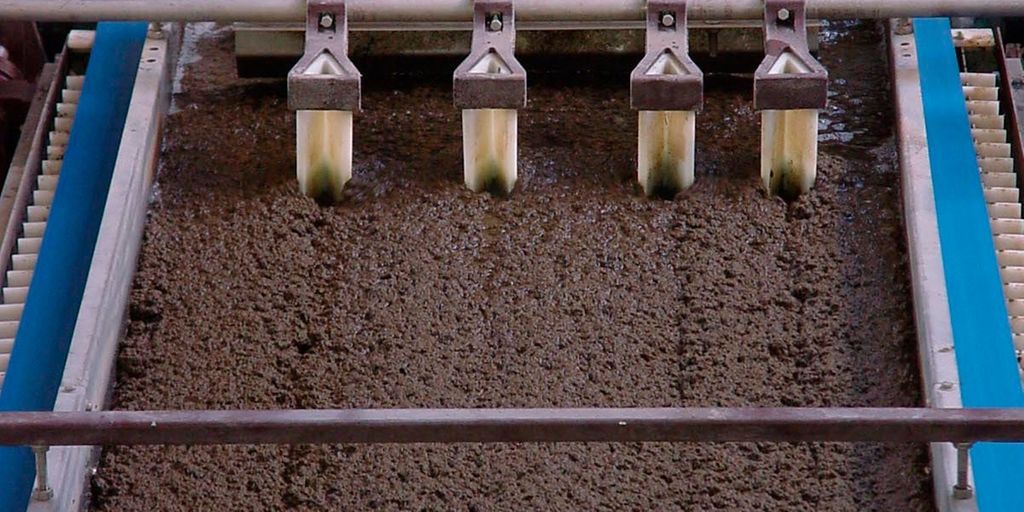
Learn what scheduled waste is in Malaysia, how SW Codes work, factory responsibilities, storage requirements, and legal obligations under DOE regulations.
by QT LIM 7 August 2026
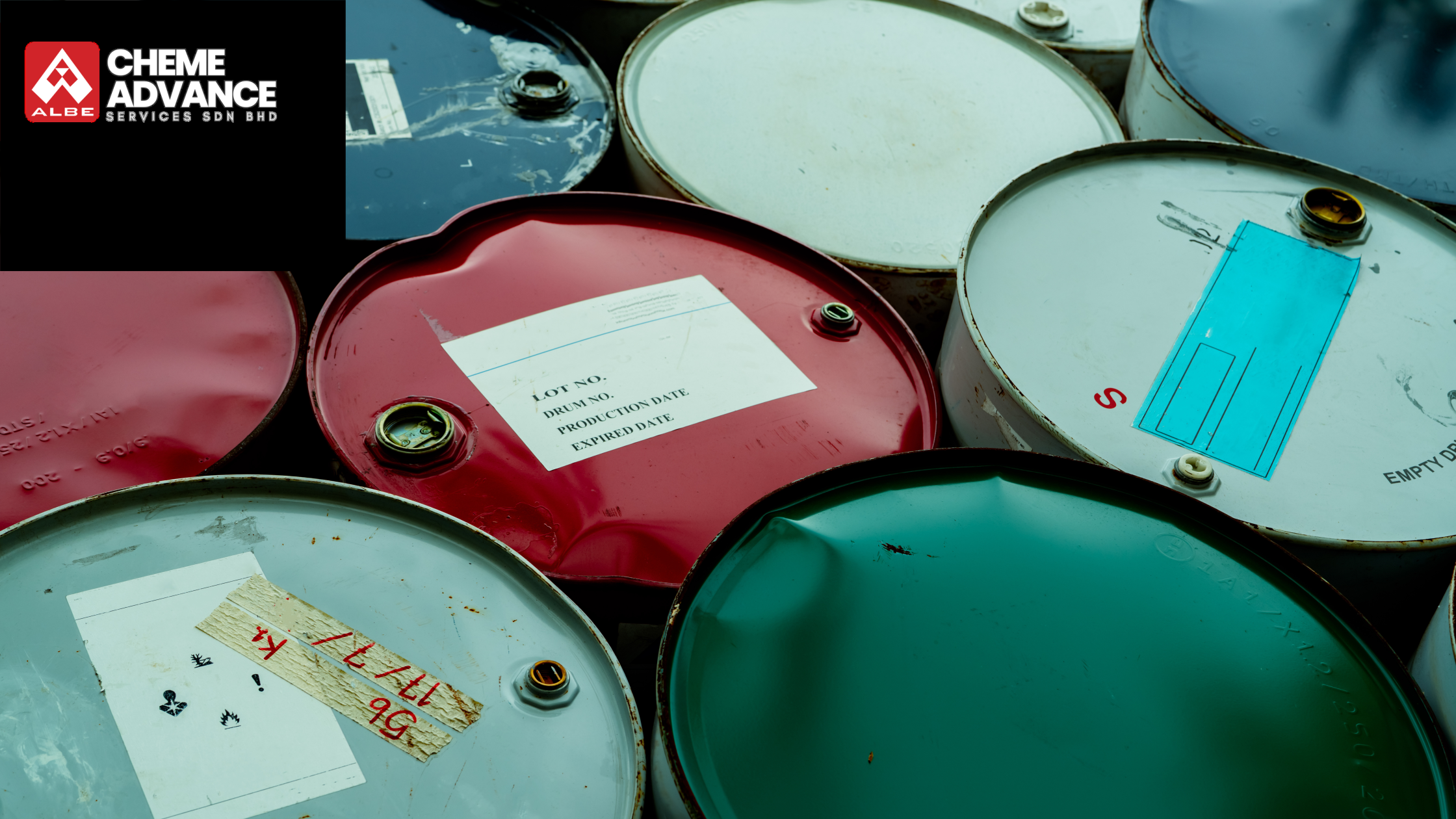
Learn how scheduled waste is classified in Malaysia, understand SW Codes, legal responsibilities, storage requirements, and how factories can maintain compliance under Malaysian environmental regulations.
by jones chee 7 August 2026
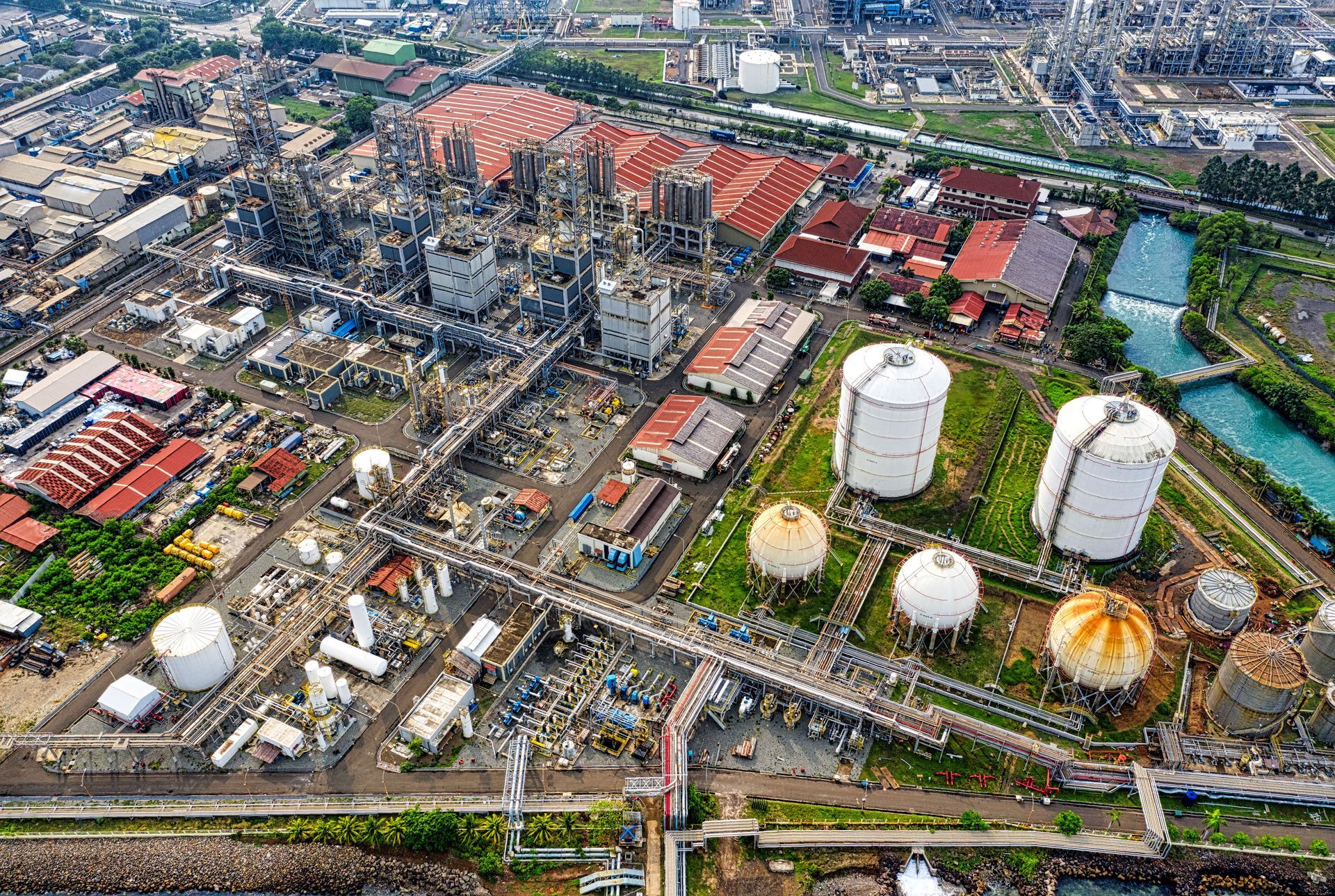
Compare Standard A and Standard B industrial effluent discharge standards in Malaysia, understand the key differences, compliance requirements, and how to determine which standard applies.
by jones chee 23 July 2026
Learn about water pollution fines Malaysia, industrial effluent penalties under the Environmental Quality Act 1974, and how factories can reduce compliance risks.
Show More