
Food Factory Wastewater Malaysia: Common Causes of High COD, BOD and Oil & Grease
Why Is Food Factory Wastewater in Malaysia Difficult to Treat?
Food factory wastewater typically contains high concentrations of organic matter, suspended solids, fats, oils, and grease (FOG). Ingredients such as sugars, starches, proteins, dairy products, edible oils, and food residues contribute to elevated Chemical Oxygen Demand (COD) and Biochemical Oxygen Demand (BOD), making biological treatment more challenging if the wastewater is not properly equalised and pre-treated.
Maintaining stable wastewater treatment requires understanding the source of these pollutants rather than simply increasing chemical dosage or aeration.
Why Food Processing Wastewater Is Different

Organic loading. Process variability. Seasonal production.
Unlike many manufacturing industries, food processing generates wastewater whose characteristics can change significantly throughout the day.
Typical sources include:
- Equipment washdown
- Production line cleaning
- Ingredient spills
- Cooking operations
- Packaging line cleaning
- CIP (Clean-in-Place) systems
- Floor washing
- Product changeovers
As production changes, wastewater loading changes as well, creating challenges for treatment plants.
Three Important Food Factory Wastewater Parameters
Chemical Oxygen Demand (COD)
What Is COD?
COD measures the total amount of oxygen required to chemically oxidise organic pollutants.
High COD usually indicates a large amount of dissolved organic matter entering the treatment system.
Common Sources of High COD
Sugar
Syrups
Starch
Dairy products
Fruit pulp
Food residues
Beverage concentrate
Molasses
Protein-rich wastewater
Operational Impact
High COD increases oxygen demand within the biological treatment process.
If the loading exceeds the design capacity, operators may observe:
- Low dissolved oxygen
- Reduced treatment efficiency
- Rising sludge production
- Higher operating costs
Biochemical Oxygen Demand (BOD)
What Is BOD?
BOD measures biodegradable organic pollutants that microorganisms consume during biological treatment.
Common Sources
Sugars
Carbohydrates
Proteins
Milk
Fruit juice
Food scraps
Organic wash water
Operational Impact
High BOD increases biological activity but may also:
- Overload aeration systems
- Cause sludge bulking
- Increase foam formation
- Reduce nitrification performance
Oil & Grease
Why Oil & Grease Matter
Oil and grease are among the most common wastewater treatment challenges in food processing.
Typical sources include:
Vegetable oils
Palm oil
Cooking oil
Butter
Margarine
Animal fats
Meat processing
Frying operations
Operational Impact
Excessive FOG can:
- Coat biological flocs
- Reduce oxygen transfer
- Block pipelines
- Increase sludge production
- Cause odour problems
- Reduce clarifier performance
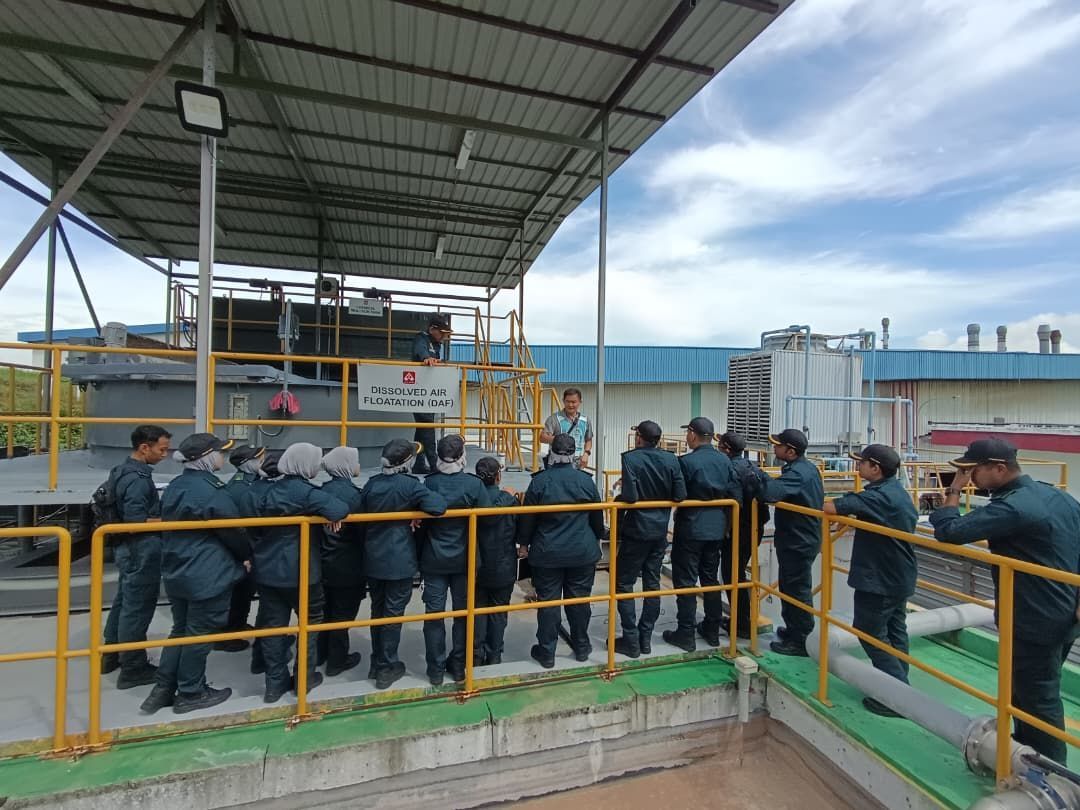
Many food factories therefore install Dissolved Air Flotation (DAF) systems to remove oil and grease before biological treatment.
Common Wastewater Characteristics by Food Industry
Typical Wastewater Characteristics
Industry
Beverage
Dairy
Dairy
Seafood
Palm Oil
Bakery
Sauce Manufacturing
Confectionery
High sugar, high COD
High protein, fats, lactose
Blood, fats, suspended solids
Protein, oil, nitrogen
High COD, oil & grease
Flour, starch, sugar
Salt, oil, suspended solids
Sugar, syrup, colouring
Why Food Factory Wastewater Changes Every Day
Many factories assume wastewater quality remains relatively constant.
In reality, wastewater characteristics vary due to:
- Different production batches
- Seasonal demand
- Product changeovers
- Cleaning schedules
- Raw material changes
- Production downtime
- Maintenance activities
These fluctuations are one of the main reasons equalisation tanks (EQ Tanks) are critical in food industry wastewater treatment.
How Food Factories Can Reduce High COD and BOD
Instead of relying solely on wastewater treatment, many factories first reduce pollution at the source.
Examples include:
- Recovering product spills before washing
- Improving housekeeping
- Segregating high-strength waste streams
- Optimising CIP procedures
- Reducing water consumption
- Installing effective equalisation
- Optimising DAF performance
- Maintaining healthy biological treatment
Reducing pollutant loading before treatment often lowers chemical consumption and improves overall treatment stability.
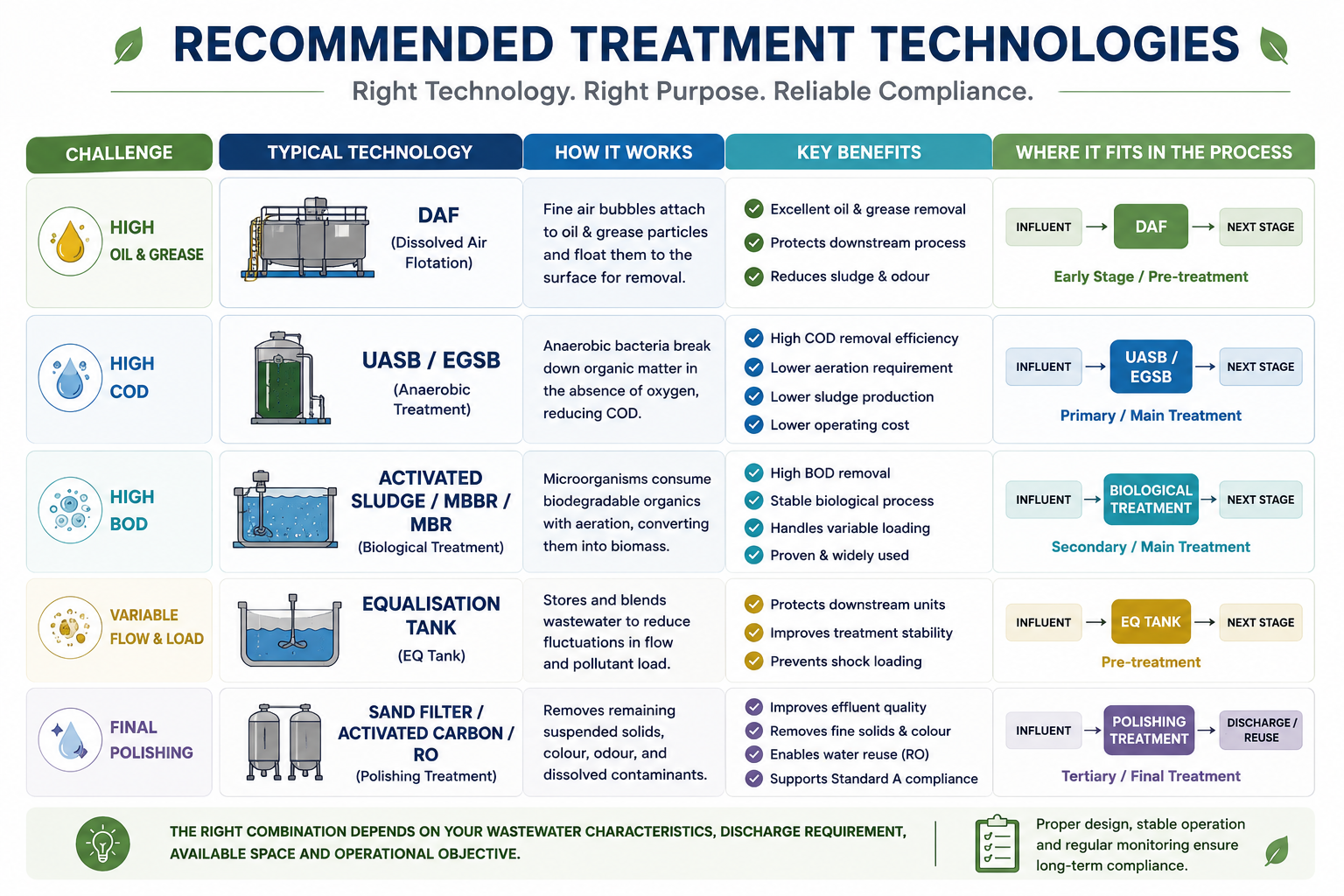
Recommended Treatment Technologies
The best treatment process depends on wastewater characteristics rather than industry alone.

Engineering Insight
One observation across food manufacturing facilities is that wastewater treatment performance is often limited by influent variability rather than treatment technology.
Plants with effective equalisation, proper DAF operation, and stable biological treatment generally experience fewer compliance issues than facilities that attempt to compensate for poor influent control by increasing chemical dosage.
This reinforces an important principle:
Stable influent produces stable effluent.
Final Thoughts on Food Factory Wastewater in Malaysia
Food factory wastewater presents unique treatment challenges because pollutant concentrations and hydraulic loading can vary significantly throughout the day.
Understanding where COD, BOD, and oil & grease originate allows manufacturers to improve process control, reduce treatment costs, and achieve more stable environmental compliance.
Rather than relying on corrective actions after problems occur, successful facilities focus on source reduction, proper pre-treatment, biological stability, and continuous optimisation.
Looking to Optimise Your Food Factory Wastewater Treatment System?
Cheme Advance Services Sdn. Bhd. has more than 20 years of experience supporting food and beverage manufacturers across
Malaysia with:
- Industrial wastewater treatment system design
- Food processing wastewater treatment
- DAF system optimisation
- Biological process optimisation
- MBBR and MBR upgrades
- Operation & Maintenance (O&M)
- Compliance audits
- Water reuse solutions
Book a Wastewater System Audit
Whether you are expanding production, experiencing recurring compliance issues, or planning an upgrade, our engineering team can evaluate your wastewater treatment system and recommend practical solutions tailored to your production process.
Frequently Asked Questions
Why is COD so high in food factory wastewater?
COD is primarily caused by dissolved organic materials such as sugars, starches, proteins, fats, and food residues generated during manufacturing and cleaning operations.
Is high BOD always a problem?
Not necessarily. BOD represents biodegradable organic matter that biological treatment can remove. Problems occur when loading exceeds the treatment plant's design capacity or operational control is poor.
Why is oil and grease difficult to treat?
Oil and grease reduce oxygen transfer, interfere with biological treatment, and can cause blockages and sludge settling problems. Effective pre-treatment, such as Dissolved Air Flotation (DAF), is often required.
Which wastewater treatment system is best for food factories?
There is no universal solution. Technology selection depends on wastewater characteristics, discharge requirements, available space, operating costs, and long-term operational objectives.
About Author

Jones Chee
Marketing Engineer | Cheme Advance Services Sdn. Bhd.
Jones is a Marketing Engineer at Cheme Advance Services Sdn. Bhd. and holds a Bachelor of Mechanical Engineering (Honours) from Monash University Malaysia. Drawing on over five years of experience in environmental engineering and working closely with Cheme Advance's technical specialists, he develops technically reviewed content on industrial wastewater treatment, plant optimisation, and environmental compliance.