The Hidden Costs Inside Your Wastewater Treatment System

sales albeadvance • 6 May 2026

Share this article

Why Your Wastewater System May Be Costing More Than You Think

Most industrial wastewater treatment plants look fine on paper.


Effluent meets discharge limits. Reports are submitted. Everything appears compliant.


But here’s the truth: compliance does not mean your system is efficient.


Many plants are quietly losing money due to hidden operational issues that are not captured in standard reports.


This article explains where these hidden costs come from and how you can start identifying them.


What Are Hidden Costs in Wastewater Treatment?

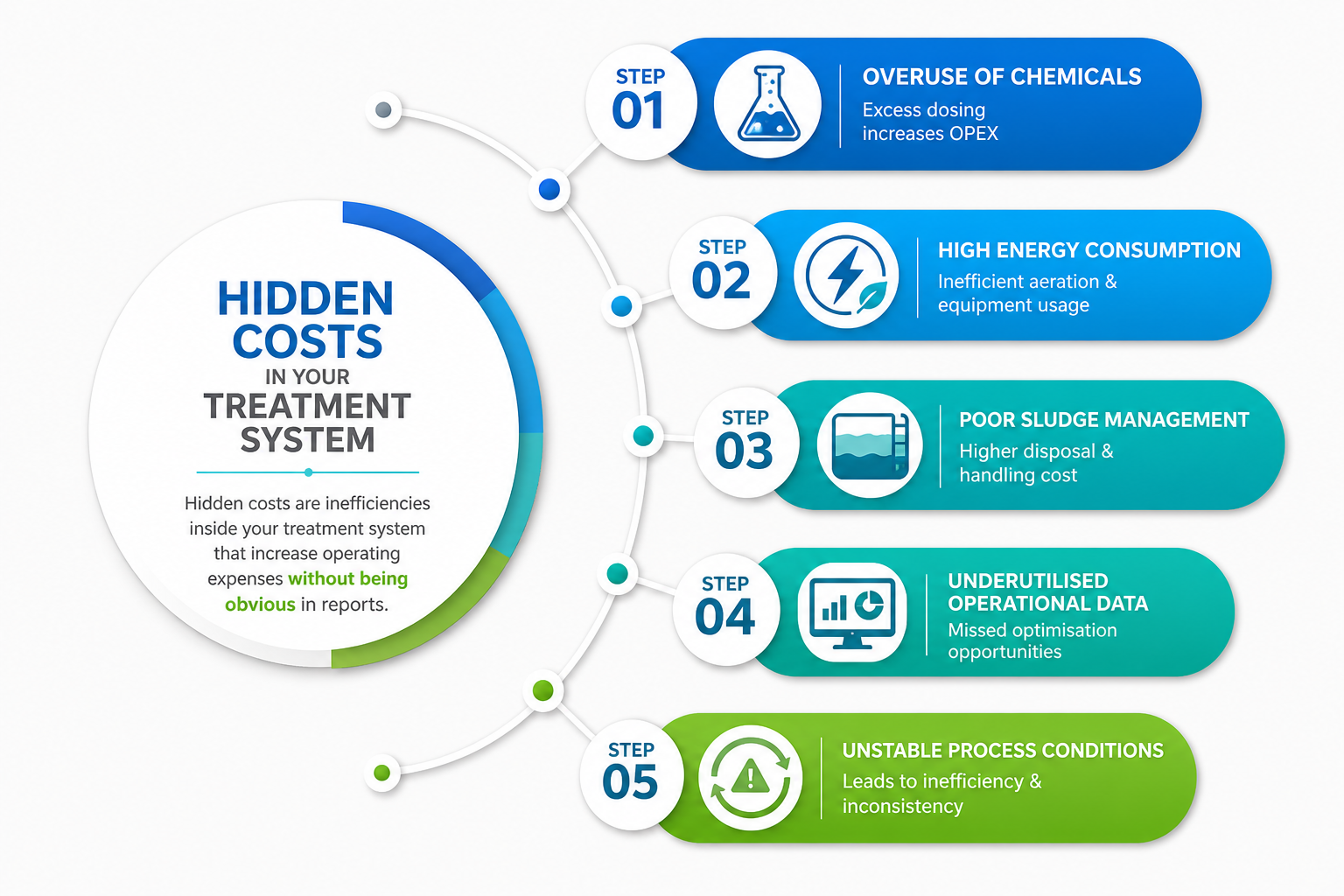
Hidden costs are inefficiencies inside your treatment system that increase operating expenses without being obvious in reports.

They usually come from:


  • Overuse of chemicals
  • High energy consumption
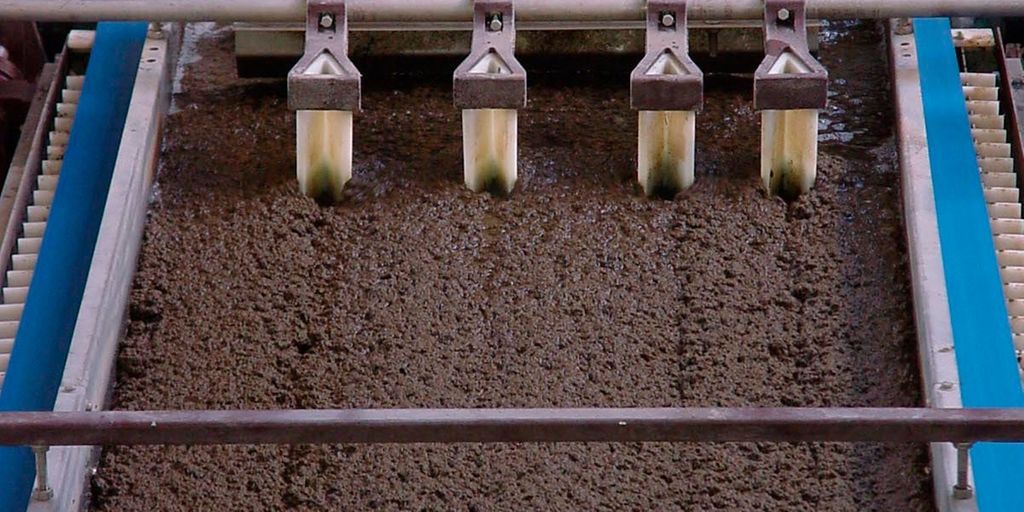
  • Poor sludge management
  • Underutilised operational data
  • Unstable process conditions


These issues develop slowly, which makes them harder to detect but more expensive over time.


Why a “Compliant” System Is Not Always Efficient

Most plants focus on end-of-pipe results like COD, BOD, TSS, and pH.


While these are important for compliance, they do not show what is happening inside your system.

A compliant plant can still have:


  • Poor biological performance
  • Inefficient aeration
  • Sludge imbalance
  • Increasing chemical dependency


These internal issues are where hidden costs begin.


Hidden Cost 1: Increasing Chemical Usage

Why It Happens

When the system becomes unstable, operators often increase chemical dosing to maintain compliance.


The Real Impact

  • Higher chemical cost
  • More sludge production
  • Increased disposal expenses


This creates a cycle where the plant becomes dependent on chemicals instead of fixing the root problem.

Hidden Cost 2: High Energy Consumption from Aeration

Why It Happens

Aeration systems are energy-intensive and often run inefficiently due to:


  • Dirty or ageing diffusers
  • Poor air distribution
  • Incorrect DO settings


The Real Impact

  • Higher electricity bills
  • No improvement in treatment performance


You end up paying more without getting better results.

Hidden Cost 3: Sludge Management Problems

Why It Happens

Improper control of sludge age (SRT) leads to imbalance in the system.


The Real Impact

  • Weak biological activity
  • Poor settling sludge
  • Higher risk of bulking
  • Increased sludge disposal cost


Sludge issues often trigger other problems across the plant.

Hidden Cost 4: Data Without Insight

Why It Happens

Plants collect data like DO, MLSS, and flowrate but do not analyse it properly.


The Real Impact

  • Trends are missed
  • Problems repeat
  • Decisions become reactive


Data is only valuable when it is used to improve operations.

Hidden Cost 5: Gradual Process Imbalance

Why It Happens

Changes in influent (load, nutrients, contaminants) are not tracked closely.


The Real Impact

  • Reduced system stability
  • More chemical usage
  • Higher risk of failure


These are slow changes but they lead to big costs later.


How Do You Identify Hidden Costs?

To move beyond compliance, you need to monitor your system differently.


Focus on:

  • Trends over time, not single readings
  • Chemical usage patterns
  • Energy per m³ treated
  • Sludge production and control
  • System response to influent changes


Regular technical reviews can help detect inefficiencies early.

How to Reduce Wastewater Treatment Operating Costs

To reduce hidden costs, focus on optimisation instead of correction.


This includes:

  • Improving biological stability
  • Optimising aeration performance
  • Managing sludge age properly
  • Using data for decision-making


A stable system always costs less to operate.

Final Thoughts

The highest costs in your wastewater treatment system are often the ones you don’t see.


They build up slowly through energy waste, chemical overuse, and process imbalance.


If left unchecked, these hidden costs can significantly impact your operating budget.

Need Help Reducing Wastewater Treatment Costs?

At Cheme Advance, we help industries identify inefficiencies and optimise wastewater treatment systems for better performance and lower cost.


Contact us today to assess your system

Contact Us

Recent Posts

Industrial wastewater flowing into a wastewater treatment plant tank
by sales albeadvance 13 May 2026
Learn how sludge volume affects wastewater treatment cost, process stability, disposal fees, and long-term plant performance.
Cheme Advance at Environmental Management & Compliance 2025 in Kedah
by sales albeadvance 12 May 2026
Cheme Advance joined Environmental Management & Compliance 2025 in Kedah to share practical insights on wastewater treatment and environmental compliance.
by sales albeadvance 5 May 2026
A behind-the-scenes look at our training session with DOE Kulim, sharing real-world industrial wastewater challenges, technologies, and the role of enforcement in protecting water resources.
24 April 2026
Industrial wastewater treatment systems rarely fail suddenly. Learn the real causes, early warning signs, and practical ways to stabilise performance and maintain compliance.
by Admin 21 November 2025
Industrial effluent treatment systems constitute a fundamental component of sustainable industrial operations, ensuring that wastewater generated from manufacturing processes undergoes proper treatment before discharge. These systems are designed to eliminate hazardous contaminants, thereby safeguarding both environmen
by Admin 21 November 2025
In Malaysia, managing waste, particularly wastewater, is becoming an increasingly critical issue. With industries expanding rapidly and environmental concerns growing, the need for efficient waste management systems has never been more pressing. One essential piece of equipment in the wastewater treatment process is the sludge dewatering press. But what exactly is it, and how does it contribute to sustainability and efficiency? Let’s dive into the importance of it and why it’s becoming indispensable in Malaysia.