

Industrial Effluent Standard Malaysia: Discharge Limits Every Factory Must Meet
What Is the Industrial Effluent Standard in Malaysia?

Malaysia's industrial effluent discharge standards are regulated under the Environmental Quality (Industrial Effluent) Regulations 2009, made under the Environmental Quality Act 1974 (Act 127). These regulations establish permissible discharge limits for various wastewater quality parameters, including pH, Chemical Oxygen Demand (COD), Biochemical Oxygen Demand (BOD), Total Suspended Solids (TSS), Oil & Grease, Ammoniacal Nitrogen (NH₃-N), and heavy metals.
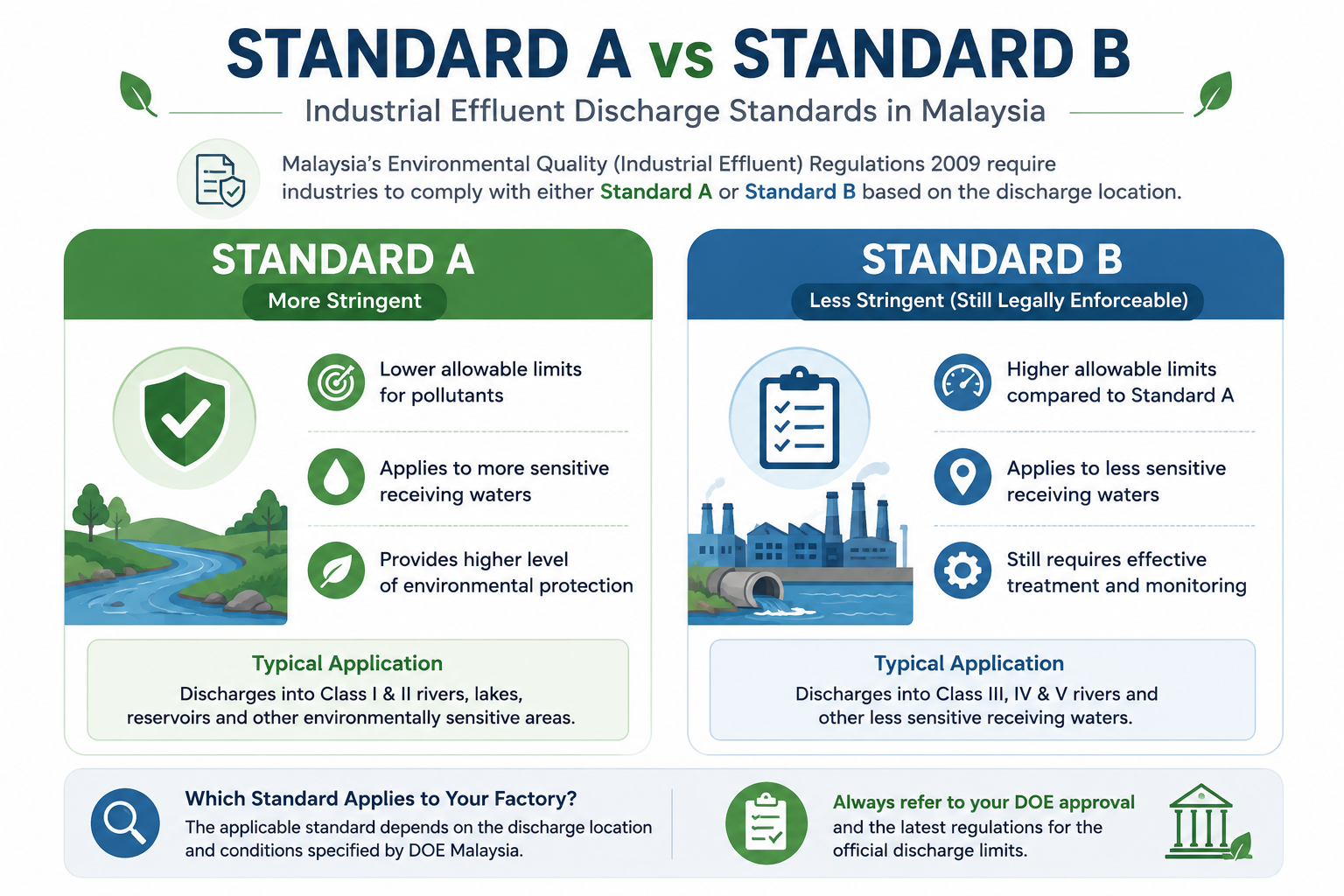
Depending on the discharge location, industries are generally required to comply with either Standard A or Standard B.
What Are Industrial Effluent Standards?
Environmental protection. Regulatory compliance. Responsible wastewater management.
Industrial effluent standards define the maximum allowable concentrations of pollutants that may be discharged from industrial facilities after wastewater treatment.
The objective is to:
- Protect rivers and water resources
- Safeguard aquatic ecosystems
- Reduce pollution
- Promote sustainable industrial development
Compliance depends not only on treatment technology but also on consistent plant operation and process control.
Standard A vs Standard B
One of the first questions asked by manufacturers is:
"Which discharge standard applies to my factory?"
Generally:
Standard
Typical Application
Standard A
Standard A
More stringent discharge requirements
Less stringent than Standard A but still legally enforceable

*The applicable standard depends on the discharge location and the requirements specified by the Department of Environment (DOE) Malaysia.
Factories should always confirm the applicable discharge standard with the relevant approvals and regulatory requirements.
Key Industrial Effluent Parameters
Routine monitoring typically includes the following parameters.
Why it Matters
Parameter
pH
Chemical Oxygen Demand (COD)
Biochemical Oxygen Demand (BOD)
Total Suspended Solids (TSS)
Oil & Grease (O&G)
Ammoniacal Nitrogen (NH₃-N)
Heavy Metals
Temperature
Protects biological treatment and receiving waters
Indicates organic pollution loading
Measures biodegradable organic matter
Indicates suspended particles in wastewater
Prevents surface pollution and treatment disruption
Important for aquatic life protection
Prevents toxic contamination
Affects biological processes and receiving waters
Important: Always refer to the latest Environmental Quality (Industrial Effluent) Regulations 2009 and any subsequent amendments for the official numerical discharge limits.
Understanding the Most Common Parameters
Chemical Oxygen Demand (COD)
COD measures the amount of oxygen required to chemically oxidise organic matter in wastewater.
High COD often indicates:
- High organic loading
- Production changes
- Poor biological treatment performance
- Hydraulic shock loading
Biochemical Oxygen Demand (BOD)
BOD measures biodegradable organic pollutants.
BOD is commonly used to evaluate:
- Biological treatment efficiency
- Organic loading
- Process stability
Total Suspended Solids (TSS)
TSS measures particles suspended in wastewater.
High TSS may result from:
- Poor sludge settling
- Clarifier carryover
- Excess hydraulic loading
- Equipment malfunction
Oil & Grease
Excessive oil and grease can:
- Reduce oxygen transfer
- Inhibit biological treatment
- Cause pipe blockages
- Increase sludge production
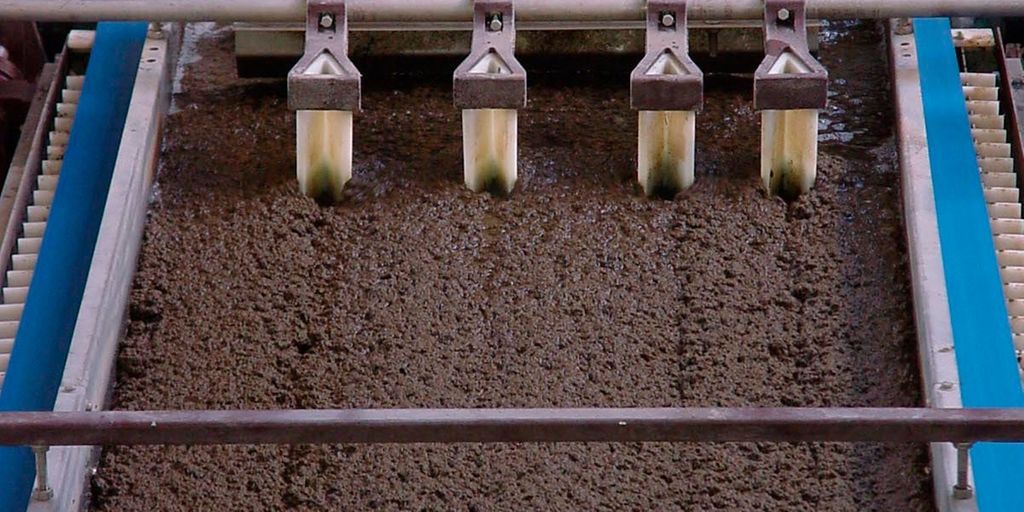
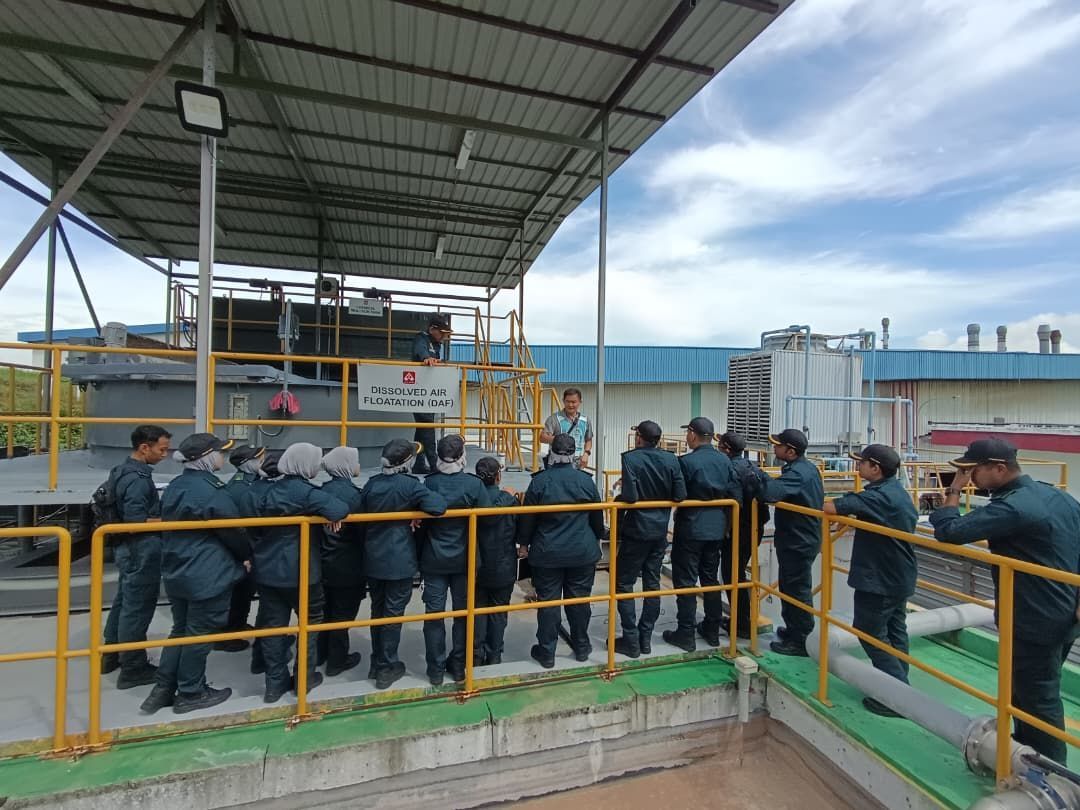
Many food processing and manufacturing industries rely on Dissolved Air Flotation (DAF) systems for effective oil and grease removal.
Ammoniacal Nitrogen (NH₃-N)
NH₃-N is removed primarily through biological nitrification.
Treatment performance depends on:
- Healthy nitrifying bacteria
- Adequate dissolved oxygen
- Stable pH
- Appropriate sludge age
- Temperature
Why Factories Fail Industrial Effluent Standards

Common causes include:
- Influent shock loading
- Poor equalisation
- Insufficient aeration
- Biological instability
- Incorrect chemical dosing
- Equipment breakdown
- Inadequate sludge management
- Increased production beyond plant capacity
Many compliance issues develop gradually rather than suddenly.
Best Practices for Maintaining Compliance
Manufacturers can improve compliance by:
- Monitoring key parameters routinely
- Maintaining stable biological treatment
- Conducting preventive maintenance
- Reviewing laboratory trends
- Optimising sludge management
- Training plant operators
- Performing regular technical audits
Related Reading: Why Some Wastewater Treatment Plants Remain Stable for Years While Others Constantly Need Troubleshooting.
Final Thoughts
Meeting Malaysia's industrial effluent standards requires more than installing treatment equipment. Long-term compliance depends on consistent monitoring, stable plant operation, preventive maintenance, and continuous optimisation.
Factories that understand the significance of each wastewater parameter are better positioned to identify process changes early, reduce operational risks, and maintain reliable compliance.
Need Help Improving Industrial Effluent Compliance?
Cheme Advance Services Sdn. Bhd. supports manufacturers throughout Malaysia with:
- Industrial Effluent Treatment System (IETS) design
- Wastewater treatment optimisation
- Compliance audits
- Plant troubleshooting
- Operation & Maintenance (O&M)
- Capacity upgrades
- Water reuse solutions
Book a Wastewater Compliance Audit
Whether you're experiencing recurring compliance issues or planning a treatment plant upgrade, our engineering team can evaluate your system and recommend practical solutions to improve performance and long-term compliance.
Frequently Asked Questions
What is the Industrial Effluent Standard in Malaysia?
The Industrial Effluent Standard is established under the Environmental Quality (Industrial Effluent) Regulations 2009 and specifies discharge requirements for industrial wastewater.
What is the difference between Standard A and Standard B?
Standard A generally has stricter discharge limits than Standard B. The applicable standard depends on the discharge location and regulatory requirements.
Which parameters are monitored?
Common parameters include pH, COD, BOD, TSS, Oil & Grease, NH₃-N, temperature, and selected heavy metals.
Does every factory have the same discharge limits?
No. Requirements depend on the applicable standard, industry, discharge point, and regulatory approvals.
Disclaimer
This article is intended for informational and educational purposes only and should not be considered legal or regulatory advice. While every effort has been made to present accurate information, manufacturers should always refer to the latest Environmental Quality (Industrial Effluent) Regulations 2009, official guidance issued by the Department of Environment (DOE) Malaysia, and any project-specific approval conditions when determining applicable discharge requirements.
About the Author

Jones Chee
Marketing Engineer | Cheme Advance Services Sdn. Bhd.
Jones is a Marketing Engineer at Cheme Advance Services Sdn. Bhd. and holds a Bachelor of Mechanical Engineering (Honours) from Monash University Malaysia. Drawing on over five years of experience in environmental engineering and working closely with Cheme Advance's technical specialists, he develops technically reviewed content on industrial wastewater treatment, plant optimisation, and environmental compliance.