Choosing the Right Sludge Dewatering System: Belt Press, Screw Press, or Centrifuge?

sales albeadvance • 20 May 2026

Share this article

There Is No Best Sludge Dewatering System

In industrial wastewater treatment, sludge dewatering is an important part of plant operation. It affects sludge handling, disposal cost, manpower needs, and long-term system performance.


However, based on our experience working with industrial wastewater treatment systems, there is no single “best” sludge dewatering system for every water treatment plant. The right choice depends on sludge characteristics, plant operation, manpower availability, available space, operating cost, and downstream handling needs.


Before comparing belt press, screw press, and centrifuge systems, it is important to understand why sludge condition plays such a big role in equipment selection.


Why Sludge Characteristics Matter

Before choosing a sludge dewatering system, it is important to understand the sludge condition. Different types of sludge behave differently during the dewatering process.


Based on what we commonly see in plant operation, factors such as sludge concentration, sludge age, biological stability, chemical dosing, oil and grease content, and process consistency can all affect the final dewatering result.


This is why equipment selection should not be based only on the machine type. The same belt press, screw press, or centrifuge may perform differently depending on the sludge it receives.


A proper sludge dewatering decision should consider both the dewatering equipment and the treatment process before it. This helps ensure that the selected system is practical, stable, and suitable for long-term operation.


What Happens When the Wrong System Is Selected?

Choosing the wrong sludge dewatering system can create long-term operational issues.


Common problems may include:

  • Poor sludge dryness
  • Higher sludge disposal cost
  • More frequent maintenance
  • Higher chemical usage
  • Unstable operation
  • Extra manpower required
  • Higher long-term operating cost


For industrial wastewater treatment, sludge dewatering is not only about removing water from sludge. It is also about improving plant stability, reducing unnecessary cost, and supporting smoother long-term operation.


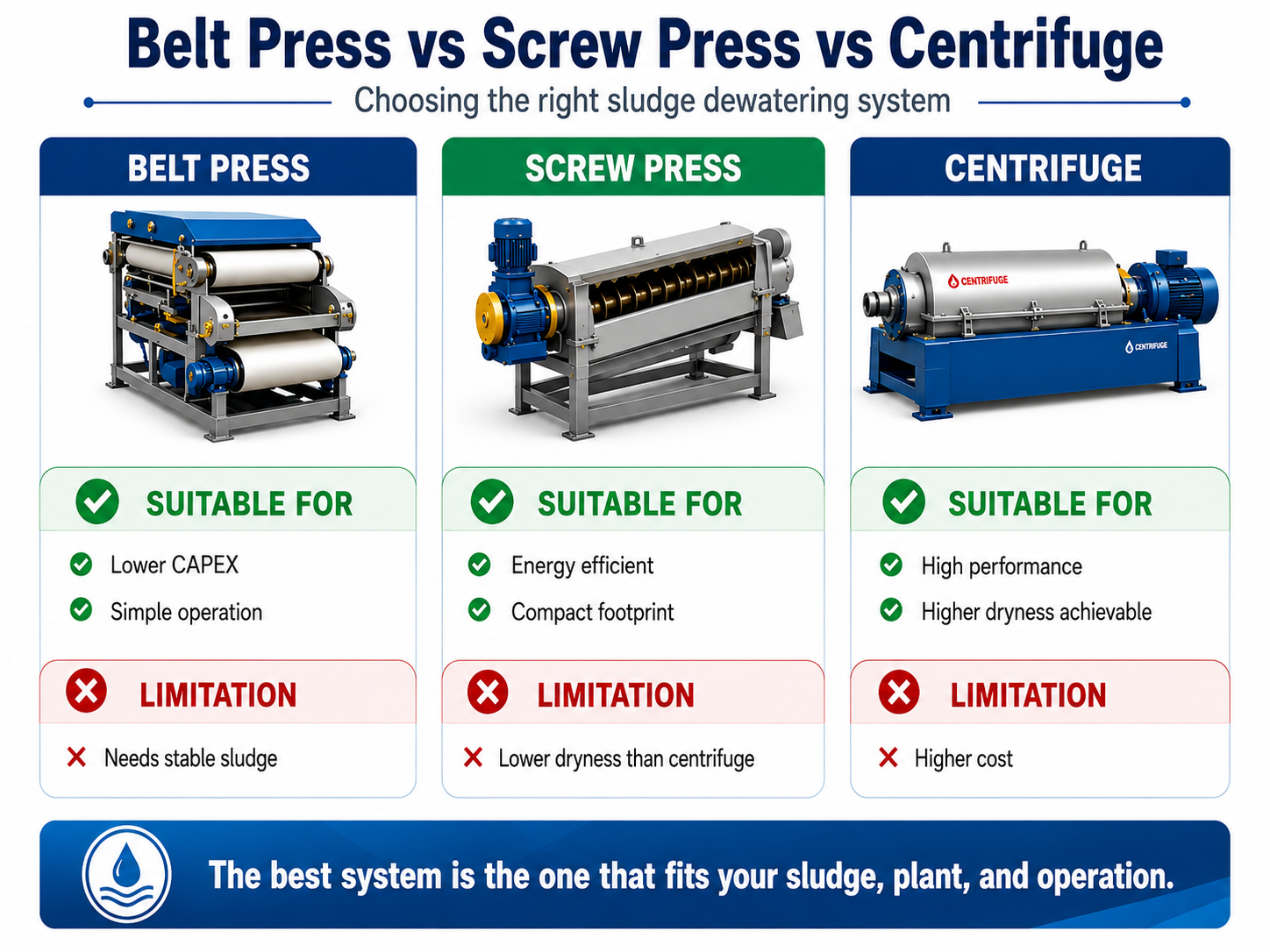
Belt Press VS Screw Press VS Centrifuge

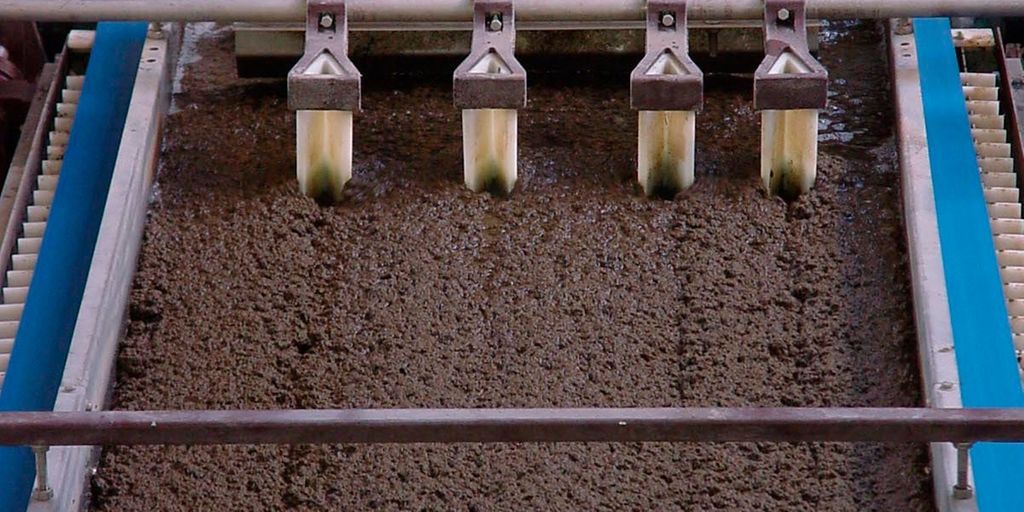
Belt Press

A belt press is suitable for plants that need a lower initial investment and simple operation.


Suitable for:

  • Lower CAPEX
  • Simple operation


Limitation:

  • Needs stable sludge conditions


This means a belt press may work well when the sludge quality is consistent. However, if the sludge condition changes frequently, the performance may become less stable.

Screw Press

A screw press is suitable for plants that need an energy-efficient and compact sludge dewatering system.


Suitable for:

  • Energy efficient operation
  • Compact footprint


Limitation:

  • Lower dryness than centrifuge


This makes screw press a practical choice for plants with limited space or lower energy usage requirements. However, the final sludge dryness may not be as high as a centrifuge.


Centrifuge

A centrifuge is suitable for plants with higher performance requirements.


Suitable for:

  • High performance
  • Higher dryness achievable


Limitation:

  • Higher cost


Centrifuge systems can achieve better sludge dryness, but they usually come with higher investment and operating cost.

Choosing Based on Real Plant Conditions

The wrong sludge dewatering system can lead to poor performance, higher operating cost, and long-term operational issues.


That is why the better question is not:

“Which system is the best?”


The better question is:

“Which system fits this sludge, this plant, and this operation?”


As an industrial wastewater treatment company in Malaysia, Cheme Advance supports practical wastewater treatment solutions that help industries choose systems based on real plant conditions, not just what worked somewhere else.


In wastewater treatment, the best system is not always the most advanced system. It is the system that fits the sludge, the plant, and the way the operation is managed.


Conclusion

There is no single sludge dewatering system that is suitable for every plant. Belt press, screw press, and centrifuge systems each have their own advantages and limitations.


The right choice depends on the sludge characteristics, plant operation, available space, manpower, budget, and downstream handling needs.


For any industrial wastewater treatment system, a good sludge dewatering decision should focus on long-term reliability, practical operation, and real plant conditions.

If you are facing challenges in your wastewater treatment system or looking to improve compliance and operational efficiency, our team is ready to support.


Reach out to us for a technical discussion or system evaluation tailored to your plant conditions.

Recent Posts

Engineer monitoring an industrial wastewater treatment system at a treatment plant.
by sales albeadvance 21 May 2026
After a shutdown, a wastewater treatment system may take time to stabilise. Proper monitoring helps reduce hidden costs, performance issues, and compliance risks.
Group photo of Cheme Advance team with visitors at ASIAWATER 2026
by sales albeadvance 19 May 2026
Cheme Advance joined ASIAWATER 2026 to connect with industry partners and share practical wastewater treatment solutions for compliance, optimisation, and long-term plant performance.
Group photo at the Cheme Advance booth during the DOE Johor Seminar
by sales albeadvance 18 May 2026
Cheme Advance attended the DOE Johor Seminar on 12–13 May 2026, focusing on the Environmental Quality Act and industry environmental compliance.
Group photo of the Cheme Advance team at IE Expo Shanghai 2026
by sales albeadvance 15 May 2026
Cheme Advance’s visit to IE Expo Shanghai 2026 was a valuable learning experience on environmental solutions and wastewater treatment trends.
Sludge dryer
by sales albeadvance 14 May 2026
Sludge drying helps reduce sludge weight, disposal cost, storage needs, and risks, supporting compliance and long-term cost control for plants in Malaysia.
Industrial wastewater flowing into a wastewater treatment plant tank
by sales albeadvance 13 May 2026
Learn how sludge volume affects wastewater treatment cost, process stability, disposal fees, and long-term plant performance.
Cheme Advance at Environmental Management & Compliance 2025 in Kedah
by sales albeadvance 12 May 2026
Cheme Advance joined Environmental Management & Compliance 2025 in Kedah to share practical insights on wastewater treatment and environmental compliance.
by sales albeadvance 6 May 2026
Discover the hidden costs in Industrial wastewater treatment systems. Learn how to reduce chemical, energy, and sludge costs while improving plant efficiency
by sales albeadvance 5 May 2026
A behind-the-scenes look at our training session with DOE Kulim, sharing real-world industrial wastewater challenges, technologies, and the role of enforcement in protecting water resources.
24 April 2026
Industrial wastewater treatment systems rarely fail suddenly. Learn the real causes, early warning signs, and practical ways to stabilise performance and maintain compliance.
Show More