
The Hidden Cost of Not Monitoring Your Wastewater Treatment System After a Shutdown
After a festive break, maintenance shutdown, or unexpected stop, most facilities focus on one main priority: getting production back up and running.
Once production resumes, it may feel like operations have returned to normal. However, in a wastewater treatment system, restart does not always mean full recovery.
A treatment system is not just equipment that can be switched on and off. It involves biological activity, chemical balance, sludge condition, flow changes, equipment response, and daily monitoring.
This is why the first few hours and days after a shutdown are important. If early changes are not tracked properly, small system imbalances can quietly become bigger operational problems.
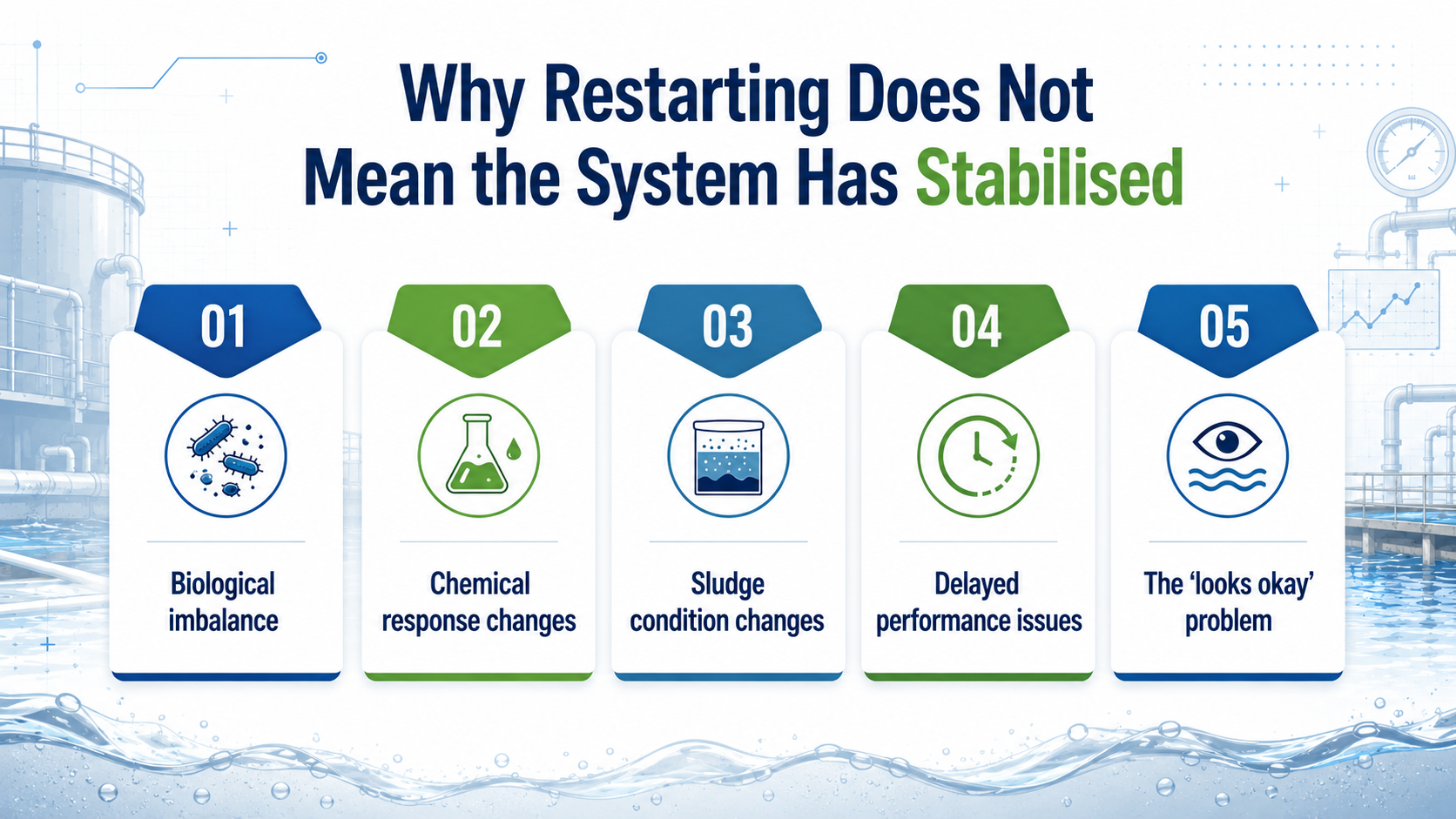
Why Restarting Does Not Mean the System Has Stabilised

After a shutdown, a wastewater treatment system may look like it is running again, but the internal process may still be recovering.
Some common issues include:
- Biological imbalance
Microorganisms in the biological process may need time to recover after reduced flow, reduced food supply, or system interruption.
- Chemical response changes
Chemical dosing may not respond the same way immediately after restart because wastewater characteristics can change when production resumes.
- Sludge condition changes
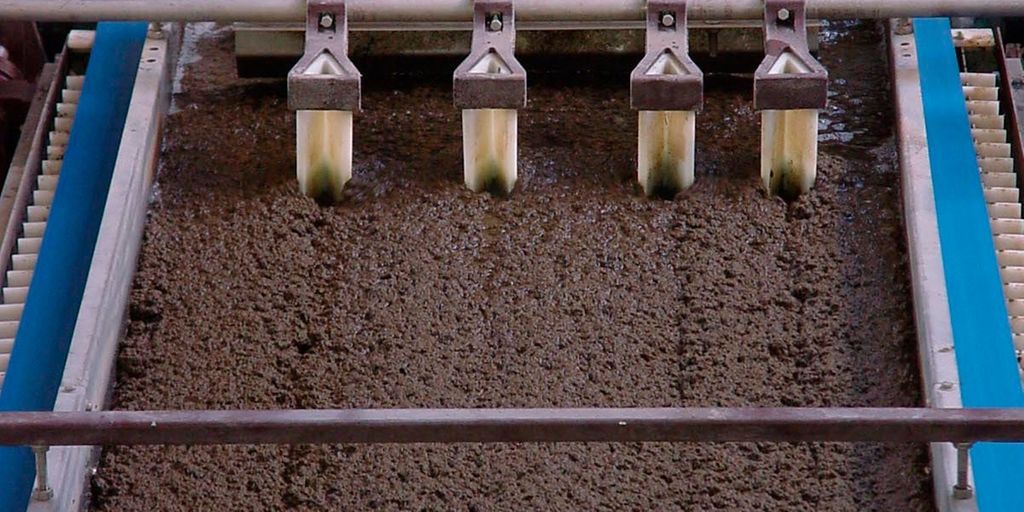
Sludge may settle differently, bulk, float, or behave inconsistently after the system has been paused.
- Delayed performance issues
Rising COD, odour, foaming, sludge bulking, or abnormal effluent may not appear immediately on the first day.
- The “looks okay” problem
Clear discharge after restart does not always mean the whole treatment process has stabilised.
For an
industrial wastewater treatment system, these changes matter because they can affect effluent quality, compliance performance, and daily plant reliability.
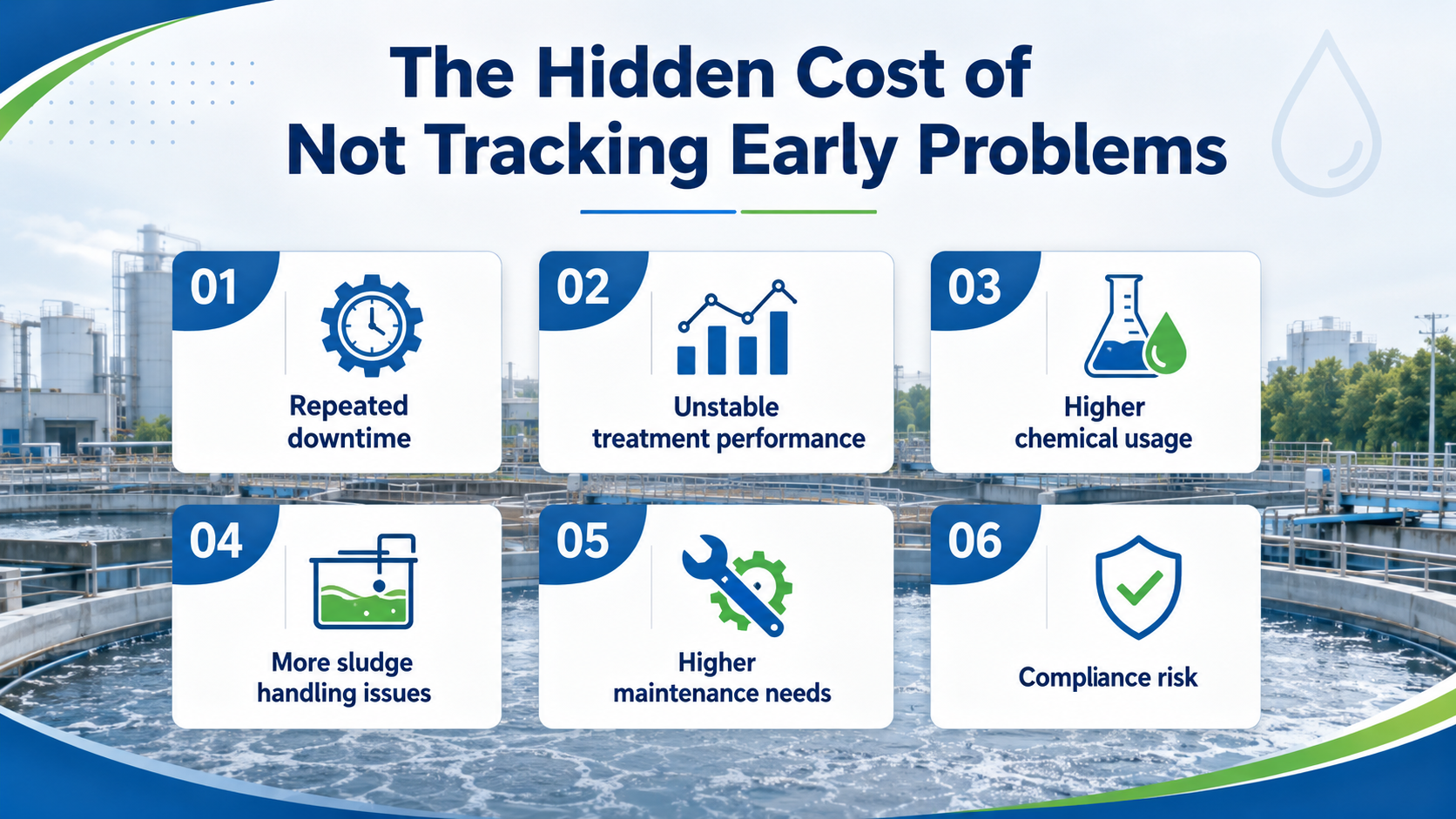
The Hidden Cost of Not Tracking Early Problems

The most expensive wastewater treatment problems are often not the ones that appear suddenly.
Many problems become costly because they are not tracked early enough. In many operations, the real cost is not always one major failure. It can come from repeated downtime, unstable performance, extra chemical usage, rising maintenance needs, or recurring operator intervention within the effluent treatment system.
When small changes are ignored, the cost may come from:
- Repeated downtime
A system that does not stabilise properly may require repeated attention from operators or technicians.
- Unstable treatment performance
Effluent quality may fluctuate, making compliance harder to maintain.
- Higher chemical usage
Operators may increase chemical dosing to “fix” the problem quickly, but this can increase operating cost.
- More sludge handling issues
Poor process control can lead to unstable sludge condition, more sludge handling problems, or higher sludge management cost.
- Higher maintenance needs
Equipment may work harder when the system is not balanced, increasing wear and service requirements.
- Compliance risk
If instability reaches the final discharge point, the plant may face non-compliance issues.
Over time, these issues can quietly affect efficiency, consistency, and overall wastewater management performance.
How Cheme Advance Supports Better Wastewater Treatment Performance
As a wastewater treatment company in Malaysia, Cheme Advance supports industries with practical wastewater treatment solutions that focus on real operating conditions.
This includes:
- checking wastewater treatment system performance
- identifying process imbalance
- reviewing chemical dosing conditions
- supporting wastewater treatment plant maintenance
- improving sludge control and system stability
- helping industries manage wastewater treatment challenges more proactively
A good restart is not only about turning the system back on. It is about helping the system return to stability.
Conclusion
After any shutdown, festive break, maintenance period, or unexpected stop, the wastewater treatment system deserves closer attention.

The system may be running, but that does not always mean it has recovered.
A proper restart is operational, biological, and chemical. It takes time, observation, and consistent monitoring.
For industries, better visibility is not just about reporting. It is about reducing hidden costs, improving wastewater management, and protecting long-term treatment performance.
In
wastewater treatment, what is not tracked is often underestimated. And what is underestimated can become expensive over time.
If you are facing challenges in your wastewater treatment system or looking to improve compliance and operational efficiency, our team is ready to support.
Reach out to us for a technical discussion or system evaluation tailored to your plant conditions.